
Inside the Software Powering NASA’s Artemis II Mission
Inside the Software Powering NASA’s Artemis II Mission
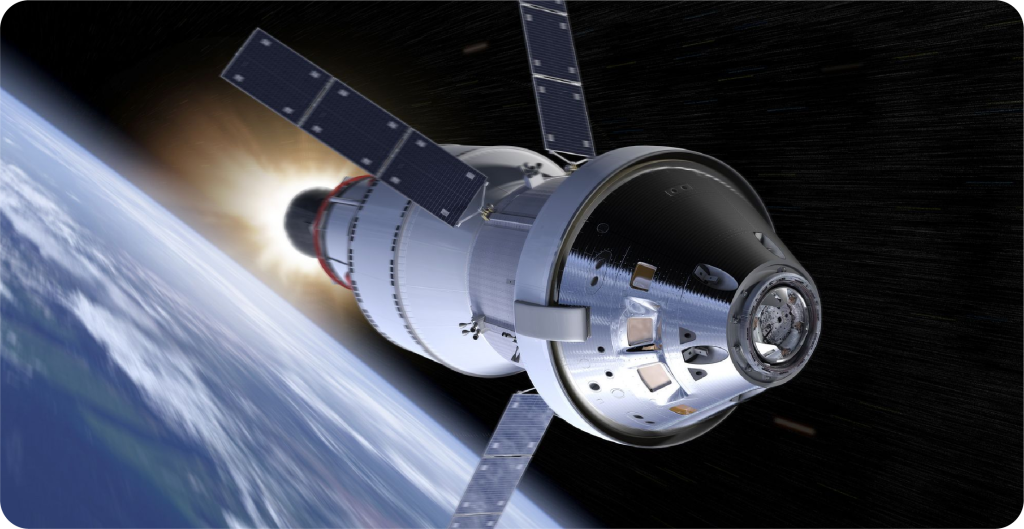
The Artemis II mission marks the first crewed journey around the Moon since the Apollo program, but the technology behind it is on an entirely different level.
Launched in April and carrying four astronauts, the mission is designed to validate the systems that will eventually support long-term lunar exploration. While the engineering is extraordinary, it’s the software ecosystem that makes such precision and safety possible.
From Apollo to Artemis: A Generational Leap
The computers that powered the Apollo missions were groundbreaking for their time, but by today’s standards, they were incredibly limited, running at around 1 MHz with minimal memory.
By contrast, the Orion spacecraft used in Artemis II is built around a deeply redundant, fault-tolerant computing architecture designed to operate reliably in one of the hardest environments imaginable.
This isn’t just an upgrade; it’s a complete transformation in how software supports space exploration.
A Fault Tolerant Core
At the heart of the spacecraft is a system designed with resilience in mind.
Rather than relying on a single computing path, Artemis II uses multiple layers of redundancy. Two Vehicle Management Computers each contain two Flight Control Modules, and within each of those modules are paired processors running in parallel.
This means multiple systems are constantly checking each other’s outputs. If one produces an incorrect result, it can be identified and isolated instantly, preventing errors from affecting the mission.
It’s a level of reliability that reflects just how critical software has become in modern spaceflight.
Networking and Autonomy in Space
Beyond raw computing power, Artemis II relies on highly structured, deterministic networking to keep everything in sync.
This architecture ensures that communication between systems happens at precisely the right time, which is essential for functions like propulsion, navigation, and guidance. The result is a predictable, stable flow of data across the spacecraft, even under extreme conditions.
To further reduce risk, backup systems are built using different hardware and software configurations. This “dissimilar redundancy” approach helps avoid shared points of failure, ensuring that if one system encounters an issue, another can take over without being affected by the same problem.
Simulating the Mission Before It Begins
One of the most powerful aspects of modern software development is the ability to simulate complex systems before they are ever deployed.
For Artemis II, teams at NASA used advanced simulation platforms to test the mission in extraordinary detail. Tools like ARRISTOTLE – a high-fidelity digital simulator – allowed engineers to run real flight software against simulated environments, including ground systems at Kennedy Space Center.
This made it possible to test emergency scenarios, validate mission plans, and analyse the system behaviour long before launch.
Alongside this, the use of modular flight systems ensures that software remains adaptable and reliable throughout different phases of the mission.
Mission Control and Real-Time Decision Making
Back on Earth, mission control teams rely on equally advanced tools to monitor and guide the spacecraft.
Software such as FreeFlyer provides real-time trajectory analysis and orbit predictions, allowing teams to make informed decisions throughout the mission. This constant feedback to loop between spacecraft and ground control is essential for maintaining accuracy and safety.
More Than Just Code
Artemis II is a powerful example of how far software engineering has come. It combines redundancy, automation, simulation, and real-time analysis into a single, highly coordinated system.
What makes it particularly remarkable is not just the complexity, but the level of trust placed in it. These systems aren’t just support a mission, they’re protecting human lives.
From Space Missions to Business Systems
While most businesses aren’t planning a trip around the Moon, the principles behind Artemis II’s software are surprisingly relevant.
Reliability, scalability, resilience, and careful planning all play a role in building systems that people can depend on. Whether it’s managing data, supporting teams, or enabling growth, the right software foundation makes everything else possible.
At Unity, we apply those same principles to the systems we design and deliver, helping businesses build solutions that are robust, adaptable, and ready for the future.
If you’ve got a software project in mind, we’d love to help you take the next step.
Speak to our team today to see how bespoke software can transform your business.
Other Articles & Blogs

The Partnership Between Humans and Software: A Powerful Collaboration
At Unity AI Software, we put a lot of value into innovation, development, growth, and evolution. We understand that businesses, society, individuals, and the world itself are constantly changing. That’s why we’re committed to embracing innovation and change within our organisation. As a testament to this, we embarked on a transformative rebranding exercise throughout 2022 to embark on a brighter future.
How Advances in Telecommunications Have Impacted the Human Race
How Advances in Telecommunications Have Impacted the Human RaceA Revolution in ConnectivityDuring the pandemic, improvements in telecommunications changed the way the world worked. VOIP systems allowed employees to work from virtually anywhere, staying connected to...

Discover the latest Unity news!
Discover the latest Unity news! Welcome Anna!As part of our continued growth, we’re excited to welcome Anna Pershyna to the Unity team as our new Tech Shop marketer. With over 10 years of marketing experience, Anna is eager to contribute to the launch and growth of...